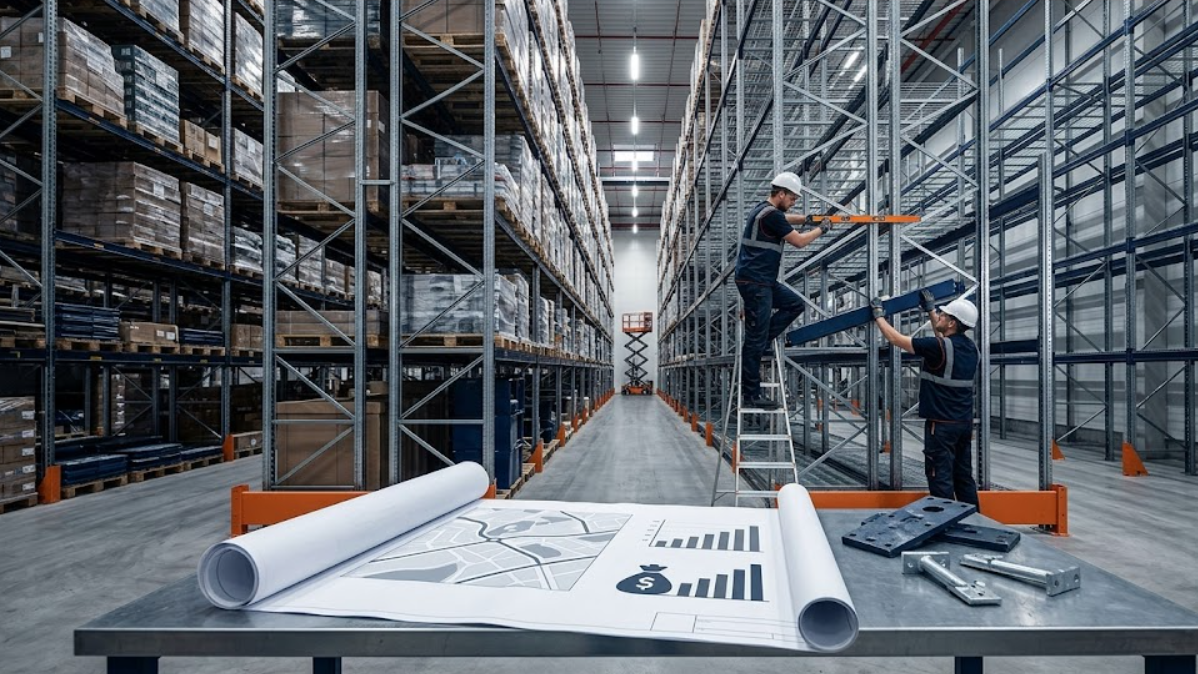
If you are managing a distribution center or manufacturing facility anywhere from the Inland Empire to the Ohio River Valley, you know the relentless pressure to maximize your cubic storage space. As supply chain demands intensify across the United States, facility managers and operations directors are continually tasked with expanding capacity.
However, when it is time to allocate capital expenditure (CapEx) for a warehouse racking installation, securing a predictable, flat-rate quote right out of the gate is notoriously difficult. If you are currently sourcing bids, you have likely noticed significant variances in pricing between integrators.
Why is this the case? In the material handling sector, no two facilities operate identically, and structural engineering is never one-size-fits-all. To help you accurately forecast your budget, appease your CFO, and eliminate costly change orders, we need to break down the core operational and structural factors that drive the cost of your pallet racking installation.
Factor 1: Scope & Scale
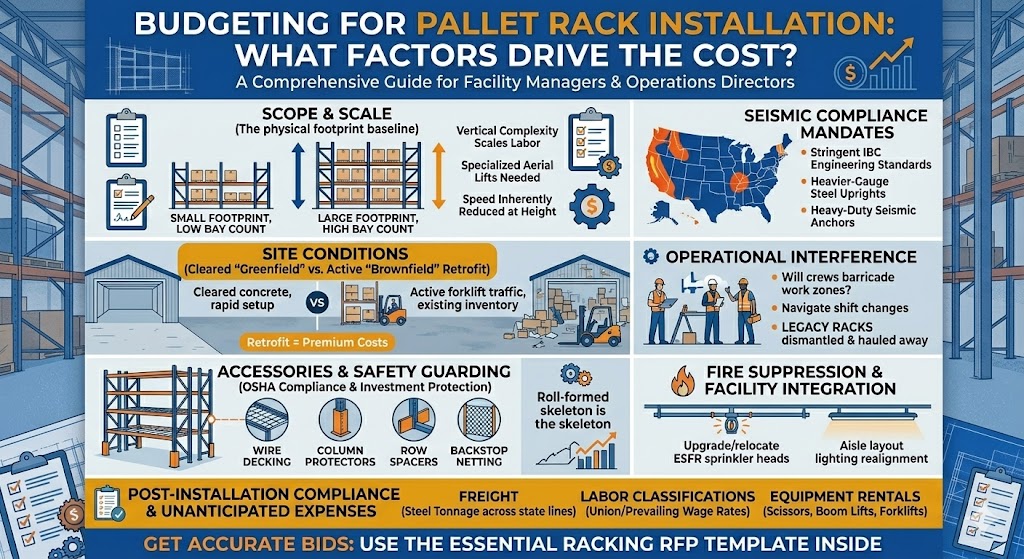
The physical footprint of your project is the baseline metric for pricing. The total number of bays directly dictates the tonnage of steel you are purchasing and the baseline man-hours required for the rack installation.
However, vertical space is a major pricing variable. As the elevation of your warehouse shelves increases to maximize cubic volume—often pushing past 24 to 30 feet in modern US distribution centers—the complexity of the installation scales accordingly. High-density systems require installation crews to utilize specialized aerial lifts. Maneuvering this machinery safely at height inherently reduces the speed of the installation, thereby increasing the total labor expenditure.
Factor 2: Site Conditions
An installation crew’s efficiency is heavily dependent on the environment they are entering. A cleared, newly poured "greenfield" facility allows for a rapid, unobstructed warehouse racking setup.
Conversely, retrofitting an active "brownfield" distribution center introduces premium costs. Key site conditions that impact your budget include:
- Operational Interference: Will the installation crew need to barricade work zones and navigate around active forklift traffic, shift changes, or existing inventory?
- Slab Integrity: Is the concrete slab perfectly level? Uneven surfaces require meticulous laser-leveling and specialized steel shims to ensure the warehouse rack is plumb and structurally compliant with Rack Manufacturers Institute (RMI) standards.
- Tear-Down Requirements: Do legacy warehouse racks need to be dismantled, banded, and hauled away before the new industrial racking installation can commence?
Factor 3: Seismic & Permitting Requirements
Regulatory compliance and geographical location significantly impact project costs in the United States. The vast majority of commercial pallet rack installation projects require municipal building permits and High-Piled Combustible Storage permits from the local Authority Having Jurisdiction (AHJ) and Fire Marshal. These carry processing fees and potential timeline delays.
Furthermore, facilities located in high-seismic zones (such as California, the Pacific Northwest, or the New Madrid Seismic Zone) are subject to stringent International Building Code (IBC) engineering standards. Seismic compliance often mandates heavier-gauge steel uprights, enlarged footplates, and heavy-duty seismic anchors embedded deep into the slab. Upgraded materials carry a higher price point, and the precision required to install them increases labor hours.
Factor 4: Accessories and Safety Guarding
Roll-formed uprights and load beams are merely the skeleton of your storage system. To ensure OSHA compliance and protect your investment from forklift impact, secondary components are almost always necessary.
Accessories such as wire decking, row spacers, backstop netting, and column protectors add to your initial materials invoice. From a labor perspective, every piece of wire deck that needs to be dropped into place, and every heavy-duty column guard that must be anchored to the concrete, adds incremental labor time to the overall warehouse racking installation.
Factor 5: Fire Suppression & Facility Integration
When reconfiguring your aisles or pushing storage higher, you must account for the facility's existing infrastructure. Upgrading or relocating Early Suppression, Fast Response (ESFR) sprinkler heads to ensure adequate in-rack water coverage is a significant expense that must be coordinated with a fire protection contractor. Additionally, warehouse lighting often needs to be realigned to match the new aisle layout so forklift operators have safe, compliant visibility without shadows.
Factor 6: Post-Installation Compliance
When finalizing your procurement budget, it is critical to account for line items that exist outside of the steel itself. Logistical expenses can severely impact project ROI if left unanticipated:
- Freight: Steel is incredibly heavy. The cost of flatbed freight to transport thousands of pounds of racking from the manufacturing plant across state lines to your dock must be calculated.
- Labor Classifications: The type of labor required by your facility or state regulations can drastically alter your final invoice. If your site mandates union labor, or if the project is government-funded and requires prevailing wage rates, expect labor costs to be noticeably higher than standard commercial non-union rates.
- Equipment Rentals: Mobile Elevating Work Platforms (MEWPs) like scissor lifts, articulating booms, and heavy-capacity forklifts required for a safe rack installation typically incur daily, weekly, or monthly rental fees.
- Travel and Per Diem: If you are contracting a highly specialized, non-local integration crew for your industrial racking installation, their travel, lodging, and daily meal per diems will be factored into the final bid.
Your Blueprint for Accurate Bids: The Essential Racking RFP Template
In the US material handling industry, the key to securing accurate, competitive bids is providing your integration partners with standardized specifications upfront. Defining these variables ensures you receive "apples-to-apples" quotes.
Use the following table as the foundation for your Request for Proposal (RFP). Fill in your facility’s parameters and submit this to your prospective vendors.
| Category | Requirement / Specification | Client Details (Fill in) |
| Project Basics | Project Name | |
| Installation Address (City, State, ZIP) | ||
| Target Mobilization / Completion Dates | ||
| Factor 1: Scope & Scale | Total System Height (in feet/inches) | |
| Total Storage Bays & Levels per Bay | ||
| Pallet Dimensions (L x W x H) & Max Load (lbs) | ||
| Factor 2: Site Conditions | Facility Status (Greenfield vs. Active DC) | |
| Facility Clear Height to Sprinklers/Joists (ft) | ||
| Slab Levelness (Are shims anticipated?) | ||
| Legacy Racking Dismantling Required? (Yes/No) | ||
| Factor 3: Seismic & Permits | Geotechnical Slab Soil Report Available? (Yes/No) | |
| Seismic Design Category (SDC) if known | ||
| Party Responsible for Local AHJ Permitting | ||
| Factor 4: Accessories | Wire Decking Specs (Flared, Step, Waterfall) | |
| Column Protectors / End-of-Aisle Guards? | ||
| Safety Netting / Pallet Stop Beams Needed? | ||
| Factor 5 & 6: Integration & Compliance | ESFR Sprinkler / Lighting Relocation Needed? (Yes/No) | |
| Third-Party Safety Inspection Required? (Yes/No) | ||
| Logistics & Labor | Union or Prevailing Wage Required? (Yes/No) |
Ultimately, in modern warehouse management, an informed buyer is a profitable buyer. By understanding these specific cost drivers and standardizing your procurement process with a detailed RFP, you can take control of your capital expenditures and partner with the right integrator for your facility's future. Keep this guide handy the next time you put out a bid for an expansion.