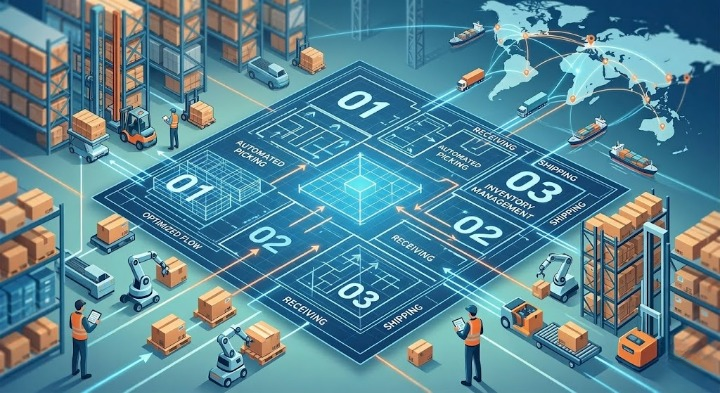
For a time, company leaders thought of the traditional warehouse as something they had to have, but did not really want. It was simply a place where extra products sat around waiting to be sold, a storage room where things went to collect dust. Today, that reality has changed completely. The internet has transformed the way people shop, forcing companies to keep up with shifting customer demands for rapid delivery. Combined with the complexities of global trade, these pressures have completely revolutionized the way warehouses work. At Racforce, we see firsthand how the warehouse has evolved into a critical component of the supply chain. It is no longer just a big box where companies store their products. The modern warehouse is a strategic asset essential to ensuring customer satisfaction, streamlining operations, and driving corporate profitability. Whether you operate a 50,000-square-foot facility or a massive nationwide network of distribution centers, understanding the strategic importance of warehousing is the first step toward optimizing your logistics and staying ahead of the competition. In this guide, we will explore how new technology and smart planning are changing the logistics landscape in America. We will dive into critical elements like material handling solutions, intelligent facility design, and strategic operational planning, highlighting how they are driving the future of the industry. 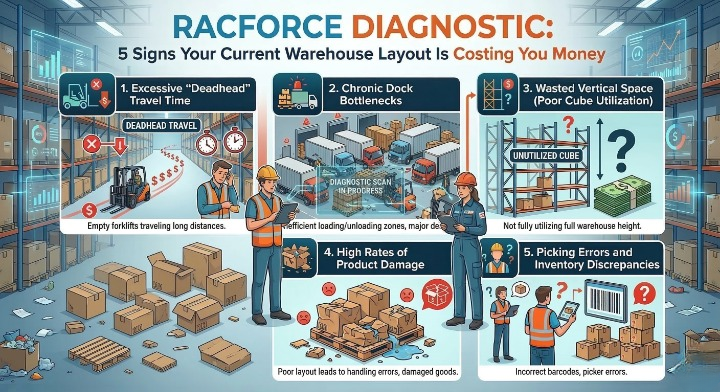
1. The Evolution: From Passive Storage to Active Strategic Hubs
Historically, warehouses simply helped manage the gap between production schedules and consumer demand. While holding inventory remains a core function, modern warehousing needs to be highly agile. Today's warehouses act as the control centers for the continuous flow of goods. Here is a look at how the strategic focus has shifted in the US market:- Velocity Over Volume: The focus has moved from how much a warehouse can hold to how fast products can move through it. Concepts like cross-docking and flow-through distribution are now standard practice for modern facilities.
- Proximity to the Consumer: With the demand for next-day and same-day delivery, distribution networks are transforming. We are seeing a strategic shift from massive, centralized locations to smaller, highly efficient urban warehouses.
- Omnichannel Capabilities: Modern warehouses can no longer afford to handle just one type of fulfillment. They must seamlessly process bulk shipments to retail partners alongside single-item e-commerce parcels, all pulling from the same shared inventory pool.
- Data-Driven Decision Making: Warehouses are now massive data generators. Every barcode scan, every forklift movement, and every automated sensor reading feeds data back to the enterprise, allowing for predictive analytics rather than reactive management.
2. Designing for Speed: Racforce’s Blueprint for Material Handling Solutions
You cannot optimize your supply chain and warehouse management without aggressively addressing your physical space. A warehouse is truly only as fast, safe, and efficient as its material handling setup. If routing is poor, racking is inadequate, and aisles are too narrow, it will create bottlenecks that cripple even the most advanced and expensive software systems. At Racforce, we know that the physical layout is the foundation of any successful warehouse strategy. To unlock a facility's true potential, operations managers must focus on engineering the floor plan and equipment for maximum throughput:High-Density Storage Solutions
Real estate in prime US industrial corridors like the Inland Empire in California or the Lehigh Valley in Pennsylvania is at a massive premium. Utilizing vertical space from floor to ceiling is critical.- Selective Pallet Racking: The industry standard. It provides 100% selectivity, allowing you to pick any pallet immediately, which is ideal for fast-moving SKUs.
- Push-Back and Drive-In Racking: These solutions maximize footprint efficiency by storing pallets multiple deep. This is perfect for Last-In, First-Out (LIFO) inventory management, drastically reducing the number of aisles required.
- Pallet Flow Systems: Designed for First-In, First-Out (FIFO) operations. This system utilizes gravity rollers to automatically advance pallets to the picking face, ensuring stock rotation for perishable goods while maintaining high-density storage.
Optimized Pick Paths and Modular Infrastructure
Travel time can account for up to 50-70% of a worker's shift. Strategic material handling design minimizes this wasted motion.- Carton Flow Racks: Integrating carton flow directly into pick modules ensures that fast-moving individual SKUs are always easily accessible. This reduces worker fatigue and significantly increases pick rates.
- Mezzanine Systems: Effectively double your usable floor space by building upward. This allows you to separate bulk storage from high-speed pick-and-pack operations.
- Scalable Conveyor Systems: As your facility's throughput grows, your infrastructure must adapt. Modular conveyor systems can be expanded as needed, ensuring your warehouse can handle peak season spikes without requiring structural overhauls.
3. The Crucial Synergy: Warehousing and Transportation Logistics
A warehouse does not operate in a vacuum. It is a vital connecting node that bridges inbound freight from manufacturers to outbound delivery networks for your customers. Effective warehousing and transportation logistics must work hand-in-hand to control overall costs. Outbound shipping typically represents the largest single chunk of a company's total logistics spend. A strategically planned warehouse can dramatically mitigate these costs. By optimizing the facility's location and utilizing smart consolidation strategies, businesses can bring in raw materials or finished goods via cost-effective Full Truckload (FTL) or intermodal shipments. Once inside the warehouse, the inventory is sorted and distributed locally via Less-Than-Truckload (LTL) or parcel carriers. The Impact of Facility Design on Shipping: At Racforce, we help our clients engineer warehouse layouts that directly optimize how freight is handled at the loading docks. When a facility is equipped with the right material handling equipment such as extendable boom conveyors to quickly unload trailers, or strategically placed outbound staging lanes, it drastically reduces the time carriers spend waiting. Quick loading and unloading means you avoid costly detention fees, keep your carriers happy, and maintain a fluid, predictable transportation network.4. Hardware Meets Software: The Brains and the Brawn
Modern supply chain and warehouse management relies on the flawless integration of physical equipment and digital intelligence. The robust physical infrastructure provided by companies like Racforce must communicate and execute seamlessly with your digital systems. A powerful Warehouse Management System (WMS) is virtually useless if the physical layout doesn't allow it to function properly. For instance, if your WMS directs a forklift driver to perform "task interleaving", putting away a pallet and picking another in the exact same aisle to save travel time, your racking system must be designed to make that maneuver physically possible. This means adequate aisle widths and highly strategic product slotting are non-negotiable. When smart facility design (the brawn) is paired with real-time inventory visibility and predictive analytics (the brains), the warehouse transforms from a reactive storage space into a proactive, finely-tuned engine.5. Value-Added Services (VAS): Moving Beyond the Shelf
The broader supply chain and warehousing sector has evolved significantly. It is no longer just about passive storage; the industry now heavily incorporates light manufacturing and rigorous quality control. By pushing final product configuration closer to the end consumer, companies can hold generic inventory and customize it only when a confirmed order drops. Strategic warehouses now routinely dedicate square footage to:- Kitting and Assembly: Grouping individual items into ready-to-ship sets (such as subscription boxes or promotional bundles) to speed up final fulfillment.
- Compliance Labeling and Ticketing: Ensuring products have the exact labels and tags required to meet the strict routing guides of major retailers like Amazon, Walmart, and Target. Failure to do so results in massive vendor chargebacks.
- Packaging Optimization: Utilizing automated void-fill machines and custom box-sizing equipment to pack products in the most efficient way possible, drastically reducing dimensional weight (DIM) shipping charges.
6. Building Resilience and Mitigating Supply Chain Risk
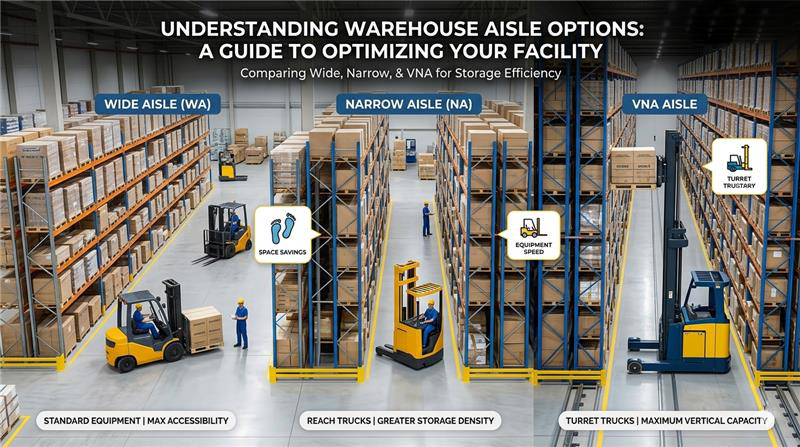
If the US logistics industry has learned anything in recent years, it is that supply chains are incredibly fragile. Disruptions, whether from global pandemics, port strikes, severe weather events, or geopolitical tensions, are no longer just possibilities; they are inevitabilities. Warehousing plays a paramount role in supply chain resilience. The traditional "Just-In-Time" (JIT) inventory model, which minimized warehouse space to reduce carrying costs, exposed massive vulnerabilities when global supply lines froze. Today, we are seeing a strategic shift toward "Just-In-Case" (JIC) inventory models. Companies are strategically increasing their safety stock levels. However, holding more inventory requires smarter, denser storage solutions to avoid endlessly leasing expensive commercial real estate. By partnering with a material handling expert like Racforce, companies can upgrade from standard selective racking to high-density alternatives, such as Very Narrow Aisle (VNA) racking. This allows operations to hold the necessary buffer stock to weather supply chain shocks without dramatically expanding their facility's physical footprint. Racforce Diagnostic: 5 Signs Your Current Warehouse Layout is Costing You Money
Even the most strategic supply chain plans will fail if the physical environment is actively working against your team. How do you know if your current setup is bleeding profits? Review this quick diagnostic checklist to see if it is time for an infrastructure upgrade:- Excessive "Deadhead" Travel Time: Are your pickers and forklift operators frequently traveling across the warehouse empty-handed? If your fastest-moving SKUs are stored at the back of the facility, or if there is no clear logical flow from receiving to put-away to shipping, you are paying for wasted motion. Proper product slotting and engineered pick paths can solve this immediately.
- Chronic Dock Bottlenecks: Do inbound trailers sit in the yard waiting for a door? Is outbound freight cluttering the aisles because staging areas are too small? A congested dock restricts the entire flow of the building. Upgrading to extendable conveyors or redesigning your staging footprint is critical to keeping transportation logistics fluid.
- Wasted Vertical Space (Poor Cube Utilization): Are you running out of floor space while looking up at 15 feet of empty air below your ceiling? If you are considering leasing a new building before maximizing the cubic volume of your current one, stop. Mezzanines, taller selective racking, and high-density systems can drastically increase your capacity without changing your address.
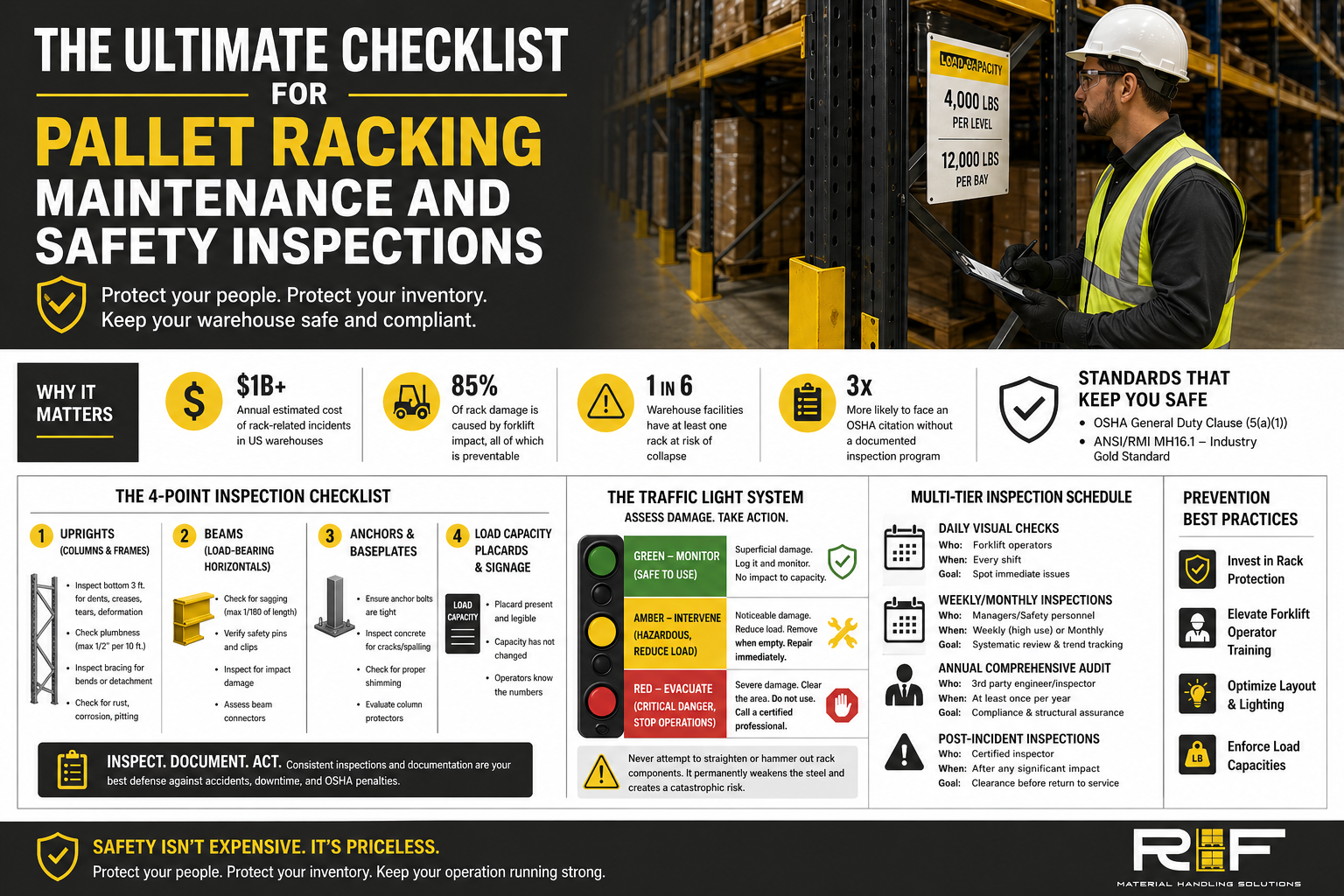
- High Rates of Product Damage: Are pallets frequently getting clipped by forklifts? Are boxes falling off over-stuffed shelves? These are clear indicators that your racking lacks proper column protectors or fails to meet RMI (Rack Manufacturers Institute) standards for load capacity and safety. Narrow aisles combined with the wrong material handling equipment or a layout that isn't in ANSI compliance for aisle clearance, leads to shrunk inventory and dangerous work conditions.
- Picking Errors and Inventory Discrepancies: A messy layout leads to messy data. If your pickers are constantly grabbing the wrong items because similar SKUs are stored too closely together in inadequate bins, your physical layout is directly harming your customer satisfaction metrics.
Conclusion: Partnering for Supply Chain Success
The traditional lines separating storage, manufacturing, and transportation have permanently blurred. As we look to the future, the deep integration of these elements will only accelerate. Companies that invest in intelligent material handling solutions, optimize their facility layouts, and view their warehouses as strategic growth engines will be the ones that dominate the fast-paced US market. Those who continue to treat them simply as passive storage units will inevitably be outpaced by faster, more agile competitors. At Racforce, we don’t just sell racks, conveyors, and standard equipment; we engineer holistic solutions that elevate your entire supply chain. We understand that your warehouse is the beating heart of your business, and we have the physical infrastructure solutions to make it operate at peak efficiency.